Views: 0 Author: Site Editor Publish Time: 2026-01-11 Origin: Site


In the modern landscape of electronic product design, the hybrid approach of combining materials is becoming a standard for engineers seeking both aesthetic appeal and structural robustness. While plastic enclosures offer lightweight properties and design flexibility, they often lack the inherent mechanical strength required to support heavy internal components or withstand rigorous mounting stresses. This is where the integration of an Enclosure Metal component, specifically a high-quality bracket, becomes essential. Specifying these metal reinforcements within a customized plastic housing allows for a professional-grade assembly that bridges the gap between consumer electronics and industrial-grade durability.
Specifying metal brackets inside customized plastic enclosures is remarkably easy when utilizing a structured design-for-manufacturing (DFM) approach, where internal mounting pillars are aligned with a precision-cut Metal Enclosure Mounting Bracket to provide superior load distribution and component security. By incorporating a Cabinet Rack Metal Enclosure Bracket or a standard Enclosure Metal reinforcement during the prototyping phase, designers can ensure that their plastic housings achieve the structural integrity of a full metal chassis while maintaining the cost-effectiveness of thermoplastic molding.
The transition from a purely plastic design to a metal-reinforced hybrid requires a clear understanding of how different materials interface. Whether you are looking for a simple Metal Enclosure Mounting Bracket to secure a PCB or a complex Cabinet Rack Metal Enclosure Bracket system for high-density server modules, the process is streamlined by modern CNC fabrication and 3D modeling. This article will guide you through the technical considerations, material benefits, and industry-standard practices for specifying metal brackets within your custom enclosures, ensuring your Enclosure Metal components integrate seamlessly with your plastic designs.
Understanding the Feasibility of Hybrid Enclosure Designs
Technical Requirements for Metal Bracket Specification
Industry Perspectives: Expert Insights on Hybrid Integration
Comparison: Plastic Support vs. Enclosure Metal Brackets
Step-by-Step Guide to Specifying a Metal Enclosure Mounting Bracket
The Role of Cabinet Rack Metal Enclosure Bracket Systems
Conclusion: Streamlining Your Hardware Design
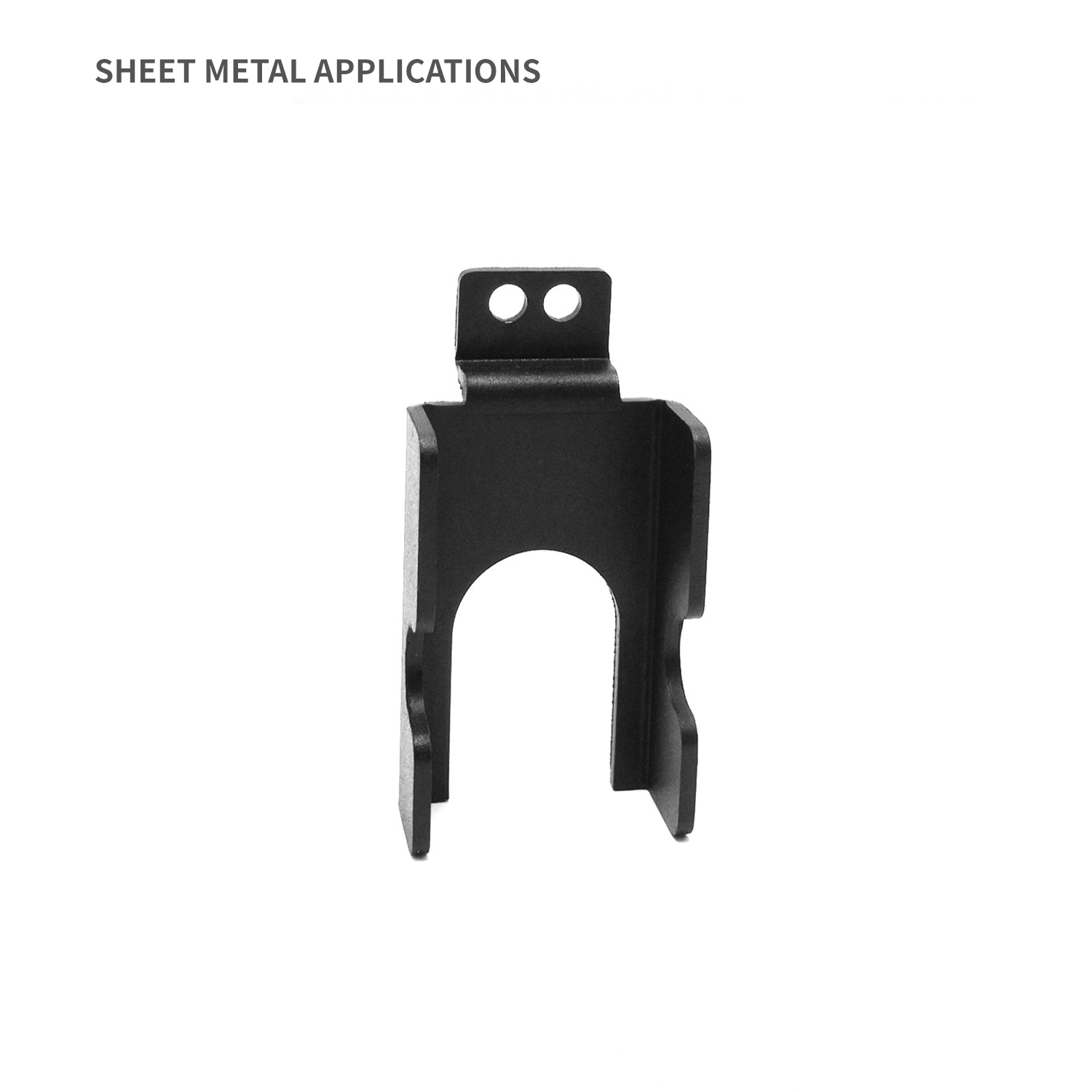
The feasibility of hybrid enclosure designs depends on the ability to integrate an Enclosure Metal bracket into a plastic shell without compromising the housing's seal or aesthetic finish. It is highly feasible and commonly practiced in the B2B sector because a Metal Enclosure Mounting Bracket provides the necessary grounding and mechanical support that plastic alone cannot offer, making the specification process a standard part of professional hardware development.
Integrating metal into plastic is a well-established engineering practice. Designers typically use brass inserts or molded-in pillars to create secure attachment points for an Enclosure Metal bracket. This allows the Metal Enclosure Mounting Bracket to handle the primary physical stresses, such as the weight of a transformer or the tension of external cables, while the plastic provides the external "skin." This synergy is particularly important in industries where EMI/RFI shielding is required; an internal Enclosure Metal plate can serve as a ground plane while staying hidden within a sleek plastic exterior.
From a manufacturing standpoint, the ease of specification comes from the accuracy of modern CNC machines. When you specify a Cabinet Rack Metal Enclosure Bracket for your internal assembly, the tolerances are held to sub-millimeter precision. This ensures that when the Enclosure Metal part arrives, it drops perfectly into the molded features of the plastic housing. Designers often use 3D CAD software to simulate the fitment, allowing them to detect any interference between the Metal Enclosure Mounting Bracket and the plastic ribs before a single part is manufactured.
Furthermore, the "ease" of this process is enhanced by the availability of standard bracket geometries. Many suppliers offer a range of pre-designed Enclosure Metal profiles that can be easily modified for custom enclosures. By starting with a proven Cabinet Rack Metal Enclosure Bracket design, engineers can reduce development time and costs. This modularity means that even for highly customized plastic housings, the internal Metal Enclosure Mounting Bracket remains a predictable and easily specified component of the overall bill of materials.
The technical requirements for specifying an Enclosure Metal bracket include defining precise hole patterns, determining material thickness for load bearing, and ensuring clearance for internal wiring and airflow. A successful Metal Enclosure Mounting Bracket specification must account for the expansion coefficients of both the plastic and the metal to prevent stress cracking or misalignment within the Cabinet Rack Metal Enclosure Bracket assembly over time.
Precision is the most critical technical requirement. When designing the interface for a Metal Enclosure Mounting Bracket, the hole centers must be meticulously aligned with the bosses in the plastic enclosure. Most professional engineers specify a slight "float" or oversized holes in the Enclosure Metal part to account for manufacturing tolerances in the plastic molding process. This ensures that the Cabinet Rack Metal Enclosure Bracket can be fastened securely without putting undue lateral stress on the plastic mounting towers, which are often the weakest point of the assembly.
| Parameter | Plastic Requirement | Enclosure Metal Requirement |
| Material Choice | ABS / Polycarbonate | Aluminum / Stainless Steel |
| Fastening Method | Threaded Brass Inserts | Countersunk Holes in Metal Enclosure Mounting Bracket |
| Load Bearing | Distributed Stress | High Point-Load Support |
| Thermal Strategy | Heat Insulator | Heat Dissipation via Enclosure Metal |
| Standardization | Custom Molded | Cabinet Rack Metal Enclosure Bracket Specs |
Another requirement is material compatibility. If the enclosure will be used in a high-vibration environment, the Metal Enclosure Mounting Bracket should be specified with locking washers or specialized adhesives. Additionally, the thickness of the Enclosure Metal must be chosen based on the weight of the components it will support. For example, a 1.5mm aluminum Metal Enclosure Mounting Bracket might be perfect for a small PCB, but a heavy power supply might require a 3mm steel Cabinet Rack Metal Enclosure Bracket to prevent sagging or resonance issues.
Lastly, grounding and conductivity must be considered. One of the primary reasons to specify an Enclosure Metal bracket inside a plastic case is to create a common ground. This requires the Metal Enclosure Mounting Bracket to have a conductive finish, such as clear chromate or zinc plating, rather than an insulating powder coat. When specified correctly, the Cabinet Rack Metal Enclosure Bracket acts as a Faraday cage component, protecting internal electronics from external interference—a feature that is technically impossible with plastic alone.
Leading platforms in the enclosure industry provide valuable insights into why and how metal brackets are specified for plastic housings. These perspectives highlight the market trend toward hybrid solutions.
OKW Enclosures platform emphasizes that metal brackets are "the essential bridge" for mounting heavy internal components. Their view is that a Metal Enclosure Mounting Bracket is necessary because it allows for the use of standard fasteners that would otherwise strip out of plastic threads. They advocate for the use of aluminum Enclosure Metal inserts to maintain the lightweight advantage of the plastic housing while adding the necessary rigidity. Their perspective is that the Cabinet Rack Metal Enclosure Bracket should be seen as a structural upgrade that extends the life of the plastic enclosure.
Metcase platform focuses on the "customization flexibility" offered by internal metalwork. They argue that by specifying an internal Enclosure Metal chassis or bracket, a designer can change the internal layout of the product without needing to redesign the expensive plastic injection mold. Their insights suggest that a Metal Enclosure Mounting Bracket is a cost-effective way to create "variants" of a product. They also point out that for rack-mounted equipment, a Cabinet Rack Metal Enclosure Bracket provides the standardized interface needed for industrial integration, regardless of the outer shell material.
By synthesizing these views, it is clear that the industry regards the Enclosure Metal bracket as a vital functional component. Whether for structural support (OKW view) or for layout flexibility (Metcase view), the consensus is that the Metal Enclosure Mounting Bracket is the key to turning a simple plastic box into a professional-grade electronic housing.
Comparing plastic internal supports to Enclosure Metal brackets reveals that while plastic ribs are cost-effective for high-volume production, a Metal Enclosure Mounting Bracket offers significantly higher tensile strength and heat dissipation capabilities. For any application involving high weight or critical grounding, the Cabinet Rack Metal Enclosure Bracket is the superior choice because it provides a reliable mechanical path that plastic supports cannot replicate.
Plastic supports, such as molded-in standoffs, are excellent for lightweight boards and low-stress environments. However, they are prone to "creep" or deformation over time, especially under constant heat. An Enclosure Metal bracket does not suffer from these issues. When you specify a Metal Enclosure Mounting Bracket, you are ensuring that the internal components remain in their exact X, Y, and Z coordinates for the life of the product. This dimensional stability is why a Cabinet Rack Metal Enclosure Bracket is the standard for telecommunications and medical equipment.
Thermal management is another area of stark contrast. Plastic is a natural insulator, meaning heat generated by a component can become trapped in a plastic pillar. In contrast, an Enclosure Metal bracket acts as a secondary heat sink. By mounting a hot component to a Metal Enclosure Mounting Bracket, you can conduct heat away from the sensitive parts of the plastic shell and distribute it across a larger surface area. This thermal advantage makes the Cabinet Rack Metal Enclosure Bracket an essential part of high-power electronic designs housed in plastic.
| Feature | Molded Plastic Supports | Enclosure Metal Brackets |
| Weight Capacity | Low (grams) | High (kilograms) |
| EMI Shielding | None | Excellent with Metal Enclosure Mounting Bracket |
| Durability | Brittle over time | Permanent |
| Prototyping Cost | High (Molds required) | Low (CNC Cabinet Rack Metal Enclosure Bracket) |
| Grounding Path | Non-conductive | Superior via Enclosure Metal |
Finally, consider the "Repairability" factor. If a screw is overtightened in a plastic standoff, the entire enclosure may be ruined. If a thread is stripped in a Metal Enclosure Mounting Bracket, it can often be repaired with a nut or a larger tap, or the Enclosure Metal part can simply be replaced. This modularity makes the Cabinet Rack Metal Enclosure Bracket a favorite for B2B applications where maintenance and field repairs are expected. The Metal Enclosure Mounting Bracket essentially serves as a replaceable skeleton for the device.
The step-by-step guide to specifying a Metal Enclosure Mounting Bracket involves identifying the load requirements, creating a 3D CAD interface between the plastic housing and the Enclosure Metal part, and selecting the appropriate finish for conductivity or aesthetics. By following a rigorous validation process, you can ensure that your Cabinet Rack Metal Enclosure Bracket integrates without mechanical interference and provides the intended structural support for your customized enclosure.
The first step is load analysis. You must weigh the internal components and determine the G-forces the product will experience during shipping or use. This dictates the thickness and material of the Enclosure Metal bracket. Once the material is chosen, you move to the CAD phase. Here, you must project the mounting bosses of the plastic housing onto the plane of the Metal Enclosure Mounting Bracket. It is best practice to include "keyhole" slots or alignment tabs on the Enclosure Metal part to make assembly foolproof for the production team.
Load Definition: Calculate the weight the Metal Enclosure Mounting Bracket must support.
Material Selection: Choose Aluminum for weight or Steel for extreme Enclosure Metal strength.
Interface Design: Map the plastic standoffs to the Cabinet Rack Metal Enclosure Bracket holes.
Tolerance Accounting: Use 0.5mm - 1.0mm clearance for easier Enclosure Metal fitment.
Finishing: Specify zinc, anodizing, or alodine for the Metal Enclosure Mounting Bracket.
Next, consider cable management. A well-designed Metal Enclosure Mounting Bracket often includes "tie-down" points or pass-through holes for wiring. This keeps the interior of the plastic enclosure organized and prevents wires from rubbing against sharp edges. If you are using a Cabinet Rack Metal Enclosure Bracket, ensure that the bracket does not block airflow vents molded into the plastic. The Enclosure Metal design should complement, not hinder, the thermal strategy of the housing.
The final step is prototyping. Use 3D printing for the plastic shell and CNC laser cutting for the Metal Enclosure Mounting Bracket. This "hybrid prototype" allows you to test the assembly's physical strength before committing to expensive injection molds. If the Enclosure Metal part needs adjustment, it is much cheaper to change a laser-cutting program than a steel mold. This iterative process is why specifying a Cabinet Rack Metal Enclosure Bracket is considered a low-risk, high-reward strategy in modern product development.
The role of a Cabinet Rack Metal Enclosure Bracket system is to provide a standardized mounting interface that allows a customized plastic enclosure to be integrated into industrial 19-inch racks or DIN rail environments. By specifying an internal Enclosure Metal frame that extends to the exterior as mounting ears, designers can create a Metal Enclosure Mounting Bracket that provides the strength of metal with the aesthetic branding of plastic.
Standardization is the primary driver here. Many industrial customers require products to be "rack-ready." Even if your product has a unique plastic shape, an internal Enclosure Metal chassis with a Cabinet Rack Metal Enclosure Bracket ensures it can be bolted into a standard server cabinet. This allows the plastic to provide the brand identity on the front panel, while the Metal Enclosure Mounting Bracket at the rear or sides handles the heavy-duty task of supporting the unit's weight within the rack.
These systems also provide superior protection against "lever-arm" stress. When a unit is mounted in a rack, the weight of the cables and the unit itself puts immense pressure on the mounting ears. A plastic ear would snap under these conditions. By specifying an Enclosure Metal plate that runs through the entire length of the plastic housing, the Cabinet Rack Metal Enclosure Bracket distributes that stress across the whole structure. The Metal Enclosure Mounting Bracket becomes the load-bearing spine of the device.
Furthermore, the Cabinet Rack Metal Enclosure Bracket often serves as the entry point for high-power connections. Since the metal bracket can be easily grounded to the rack frame, it provides an inherently safe path for electrical discharge. This dual role—structural support and electrical safety—is why the Enclosure Metal bracket is indispensable in rack-mounted plastic designs. Whether you are building networking hubs or industrial controllers, the Metal Enclosure Mounting Bracket is the component that makes your plastic enclosure "industrial strength."
In conclusion, specifying metal brackets inside your customized plastic enclosures is not only easy but a strategic necessity for high-quality B2B hardware. The combination of a lightweight plastic exterior and a robust Enclosure Metal interior provides the best of both worlds: aesthetic flexibility and mechanical endurance. By utilizing a precision Metal Enclosure Mounting Bracket, you can ensure grounding, improve thermal management, and provide the structural backbone necessary for modern electronics.
The transition to hybrid designs is simplified by the maturity of the enclosure industry. With expert insights from platforms like OKW and Metcase, and the precision of modern CNC manufacturing, the Cabinet Rack Metal Enclosure Bracket has become an accessible tool for engineers everywhere. By following a structured specification process—from load analysis to CAD validation—you can eliminate design risks and bring a more durable, professional product to market.
Ultimately, the Enclosure Metal bracket is the "silent partner" in your product's success. It stays hidden beneath the plastic surface, yet it does the heavy lifting that keeps your device safe, cool, and securely mounted. Whether you are designing for a server room or a field-deployed sensor, the Metal Enclosure Mounting Bracket is the key to unlocking the full potential of your customized enclosure design.


