Views: 0 Author: Site Editor Publish Time: 2026-06-08 Origin: Site


Every industrial drivetrain relies entirely on one critical torque-carrying component. We refer to this vital element as the gear shaft. Inefficient power transmission often causes premature internal gear wear. You might experience completely unexpected system downtime. Consequently, maintenance expenditures will quickly escalate over the operating months. Addressing these mechanical issues early saves considerable capital. Specifying the exact right Gear Shaft for Transmission remains vital. It serves as the most effective method to ensure reliable performance. You need highly dependable parts for continuous industrial operation. Proper component selection fundamentally protects your heavy machinery investments.
This guide provides an evidence-based framework for mechanical engineers. Procurement officers will also find this operational information incredibly valuable. First, you will thoroughly understand fundamental gear shaft mechanics. Next, we will evaluate specific structural advantages in detail. Finally, you will learn how to shortlist highly capable manufacturing partners. Expect actionable steps for immediate project implementation.
Integral vs. Assembled: Integral gear shafts offer higher rigidity and torque capacity, while assembled configurations provide modularity.
Performance Metrics: Precision grinding and optimal heat treatment directly correlate to reduced backlash and lower acoustic emissions.
Material Standards: Reliable transmission requires strict adherence to AGMA/ISO standards and specific alloy selections (e.g., 20CrMnTi or 42CrMo).
Sourcing Criteria: Evaluating a manufacturer requires auditing their non-destructive testing (NDT) capabilities and tolerance controls.
How does a gear shaft operate inside heavy machinery? It securely converts initial rotational motion into direct torque transfer. This solid component acts as a very strong structural bridge. It reliably connects the prime mover to the final driven load. Electric motors generate the raw rotational speed continuously. The shaft safely channels this power into highly usable mechanical force. Without it, the drivetrain simply cannot function.
The physical realities inside a gearbox remain extremely harsh. Operating systems generate massive bending moments continuously during active shifts. High torsional stress constantly twists the solid metal structure. Heavy radial loads apply extreme pressure along the bearing junctions. The shaft must handle all these destructive forces simultaneously. It requires exceptional metallurgical integrity to survive daily operations. Minor structural flaws will inevitably lead to sudden failure.
You cannot evaluate a transmission shaft in pure isolation. It functions actively within a much broader mechanical ecosystem. The shaft interacts continuously alongside precision bearings. It touches dynamic seals and mounts inside rigid housings. Proper physical alignment ensures minimal energy loss during operation. These interacting components together determine overall drivetrain efficiency. A poorly designed shaft will destroy its supporting bearings rapidly.
Common Mistakes: Many engineers forget to account for sudden shock loads. Unexpected machine stops generate massive torque spikes instantly. Shafts designed solely for continuous running loads frequently snap.
Best Practices: Always apply an adequate safety factor during early calculations. Review historical load data from similar operational machines carefully. This empirical data provides the most accurate performance baseline possible.
Engineers must match the precise shaft design to the specific application.
Manufacturers machine these components from a single solid billet. Sometimes they use a custom forged metal piece instead. Machinists cut the functional gear teeth directly into the metal body. This creates a highly unified and structurally superior mechanical component. These precise designs work best in demanding high-torque environments. Severe space constraints often require this highly compact design approach. You completely eliminate the inherent risk of keyway shear. The solid unified structure permanently prevents component separation under heavy shock loads.
These represent smooth or stepped cylindrical steel structures. You use them to mount separate gear components securely. A metal keyway provides a physical locking mechanism for the external gear. Splines offer multiple symmetrical ridges for much better torque distribution. Press-fit designs rely entirely on tight friction for adequate holding power. Modular maintenance applications strongly prefer this distinct setup. You gain very easy gear replacement options during routine servicing. Standard transmission sizing becomes much simpler to manage overall.
These utilize distinct hollow-shaft designs for direct mounting purposes. They slide and mount seamlessly onto the driven machine's rotating axis. This smart approach fully eliminates traditional foundation mounting requirements. You generally do not need extra flexible couplings for connection. However, you must carefully evaluate potential shaft alignment risks beforehand. Spatial efficiency improves dramatically inside highly crowded factory layouts. It provides a cleaner and much more direct power transfer route.
Configuration Type | Primary Advantage | Ideal Application | Maintenance Level |
|---|---|---|---|
Integral Pinion Shaft | Maximum torque capacity | Heavy-duty, space-constrained gearboxes | Low (Replace entire unit if damaged) |
Keyed Assembled Shaft | Simple modularity | Standard industrial conveyors | High (Easy gear swapping) |
Splined Shaft | Even stress distribution | Automotive and mobile machinery | Medium (Requires adequate lubrication) |
Shaft-Mounted Hollow | Zero foundation required | Overhead crushers and mixers | Medium (Alignment monitoring needed) |
Common Mistakes: Applying insufficient interference fit calculations causes severe slippage. The gear will spin freely on the main shaft eventually. This permanently destroys both mating components.
Best Practices: Ensure adequate lubrication reaches the inner spline teeth constantly. Dry splines wear out incredibly quickly under heavy operational load.
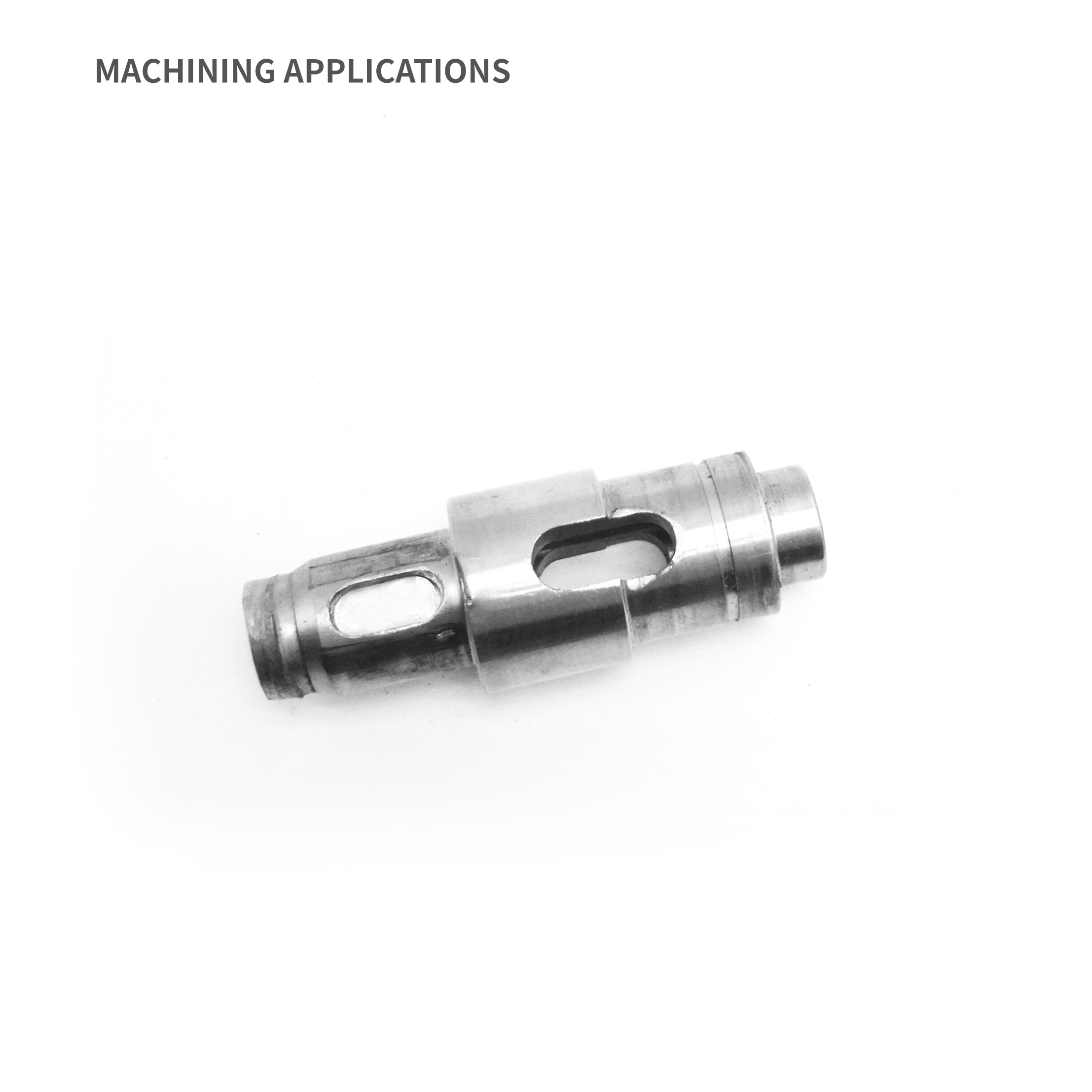
Engineered transmission components provide massive operational upgrades over standard alternatives.
Optimized Load Distribution: High-precision manufacturing ensures highly uniform tooth contact. The gear teeth mesh perfectly during every single rotation. This extreme precision strongly prevents dangerous localized stress concentrations. It completely avoids early micro-pitting on the hardened steel surfaces. Surface degradation usually leads to catastrophic mechanical tooth failure quickly. Proper load distribution extends the usable machinery lifespan significantly.
Acoustic and Vibrational Control: Precision ground components minimize inherent transmission error directly. Lower transmission error translates into much lower NVH levels. High-speed industrial applications demand this strict noise reduction. Excessive internal vibration will slowly tear a rigid gearbox apart. Ground gear profiles keep the entire operation incredibly smooth.
Enhanced Fatigue Life: Forged components offer highly optimal internal grain flow. The internal metal fibers align perfectly against the operating stresses. Advanced surface hardening significantly delays cyclic fatigue failure. You gain a highly measurable operational return rapidly. The equipment runs longer without requiring extensive manual overhauls.
Power Density: Advanced modern alloys allow a much smaller physical diameter. You can transmit the exact same or even higher torque easily. This dramatically reduces the overall transmission housing weight. The physical machine footprint shrinks considerably on the factory floor. Lighter rotational components also require much less startup energy.
Uniform tooth contact fundamentally prevents destructive surface micro-pitting.
Reduced transmission error drastically lowers ambient operating noise.
Optimal grain flow alignment extends cyclic fatigue life significantly.
Advanced metallurgy sharply increases overall mechanical power density.
Choosing the right metal dictates the ultimate operational success.
Baseline Alloys vs. High-Performance Steel: Standard carbon steel works well for simple low-load tasks. Material grades like 1045 remain affordable and very easy to machine quickly. However, heavy-duty transmissions require strictly 8620 or 4340 alloy steels. These special alloys contain hardening elements like nickel and chromium. They offer massively superior tensile strength under extreme physical loads.
The Role of Heat Treatment: Hardening processes involve highly specific engineering trade-offs. Carburizing and quenching give a very hard exterior shell. The external wear resistance increases greatly against continuous friction. Meanwhile, the inner core remains relatively soft and highly tough. This core toughness provides vital shock absorption during sudden motor stops. Induction hardening provides highly localized surface hardness instead. You apply controlled heat only to the gear teeth directly. You face much lower thermal distortion risks during final production.
Compliance and Tolerances: You must always verify original material testing certificates. A high-quality Gear Shaft for Transmission must meet precise dimensional grades. Ensure strict supplier compliance to accepted ISO 1328 rules. You might also specify American AGMA accuracy standards. Tight tolerances permanently prevent premature wear and excessive operating noise.
Material Grade | Typical Application | Preferred Heat Treatment | Core Strength Level |
|---|---|---|---|
1045 Carbon Steel | Low-speed, light-duty drives | Induction Hardening | Moderate |
20CrMnTi Alloy | Automotive gearboxes | Carburizing & Quenching | High |
42CrMo Steel | Industrial heavy machinery | Quenching & Tempering | Very High |
4340 Nickel-Chromium | Aerospace and extreme stress | Through Hardening | Maximum |
Common Mistakes: Choosing a material based purely on initial purchase availability. Cheap commercial steel contains numerous non-metallic inclusions. These microscopic inclusions act as starting points for severe internal cracks.
Best Practices: Always require vacuum-degassed steel for critical transmission applications. This ultra-clean steel offers a much longer predictive fatigue life.
Finding the right manufacturing partner mitigates huge engineering project risks.
Manufacturing Capabilities: Thoroughly check the supplier's actual heavy machinery list. Do they operate modern multi-axis CNC machining centers? Advanced gear hobbing equipment remains absolutely essential here. In-house precision grinding ensures ultimate dimensional accuracy. Outsourcing these critical finishing steps often reduces final quality control.
Quality Assurance & Testing (Risk Mitigation): Demand highly visible evidence of rigorous inspection reports.
Coordinate Measuring Machine (CMM) data proves their precise dimensional claims.
Magnetic Particle Inspection (MPI) detects invisible surface issues easily.
Ultrasonic Testing (UT) quickly finds deep subsurface micro-cracks.
Chemical composition analyzers verify the exact steel alloy grade accurately.
These hidden metallurgical defects will cause catastrophic failures later.
Prototyping to Production Scalability: Assess typical vendor lead times for initial functional prototypes. Custom splines and profiles often require highly specialized cutting tooling. The vendor must smoothly transition from prototyping to mass production. They must maintain incredibly tight tolerances during high-volume runs consistently. Uniform consistency across a large batch proves true manufacturing competence.
Next-Step Action: Initiate professional technical contact very soon. Send your detailed engineering drawings in CAD or STEP formats immediately. Provide highly specific dynamic load data for their engineering review. Gauge their technical responsiveness accurately during the early quoting phase. A reliable vendor always acts as a true engineering partner.
Best Practices: Visit the actual manufacturing facility if geographically possible. Observe their ambient temperature control systems inside the grinding room. Temperature fluctuations easily ruin micron-level dimensional tolerances during machining.
Specifying a proper mechanical component successfully balances several complex factors. It carefully combines advanced metallurgy and precision CNC machining. Application-specific geometry plays a massive role in long-term operational success. We explored various integral and assembled configurations available today. We also reviewed crucial heat treatment realities for durability.
The right setup fundamentally prevents catastrophic sudden drivetrain failures. This careful engineering approach significantly enhances long-term operational value. You completely avoid very expensive sudden machinery breakdowns entirely. Prompt your engineering team to act on this technical knowledge today. Request a thorough technical consultation from highly experienced gear specialists. Submit your current mechanical part drawings for an expert manufacturability review. You can also download detailed standard sizing catalogs online easily.
A: A standard drive shaft primarily transmits torque across a long physical distance. It usually connects separate components via flexible external couplings. A gear shaft integrates functional gear teeth directly onto its body. It strictly manages localized torque handling within the transmission housing itself.
A: Several harsh factors trigger premature mechanical failure. Severe physical misalignment places uneven stress on the metal structure. A lack of proper lubrication causes rapid friction wear. Cyclic fatigue eventually breaks down the internal material structure completely. Improper material selection initially accelerates all these degradation processes.
A: Minor surface wear sometimes accepts specialized metal spray or welding repairs. However, extensive structural damage strictly demands full component replacement. Welding heat often alters critical heat-treated zones negatively. These thermal alterations introduce severe structural risks inside high-load transmission environments.
A: Use an integral pinion shaft for extreme high-torque loads. It entirely eliminates weak points like keyways in space-constrained areas. Choose a keyed gear configuration for standard maintenance scenarios instead. This modular approach suits lower torque limits and stricter maintenance budgets perfectly.


